
Georgia Police Blotter Records
Georgia police blotter records show arrest logs, incident reports, and calls for service from law enforcement agencies across the state. You can search these records through several channels. The Georgia Department of Public Safety runs the EPORTS system for state patrol reports. County sheriff offices and city police departments keep their own blotter logs too. Georgia has 159 counties, and each sheriff handles police blotter records and open records requests for that area. Many Georgia agencies now post daily arrest data and incident reports on their websites. You can also file a formal request at any agency. This guide covers where to find police blotter records in Georgia and how to get them.
Georgia Police Blotter Quick Facts
Georgia Police Blotter Reports Online
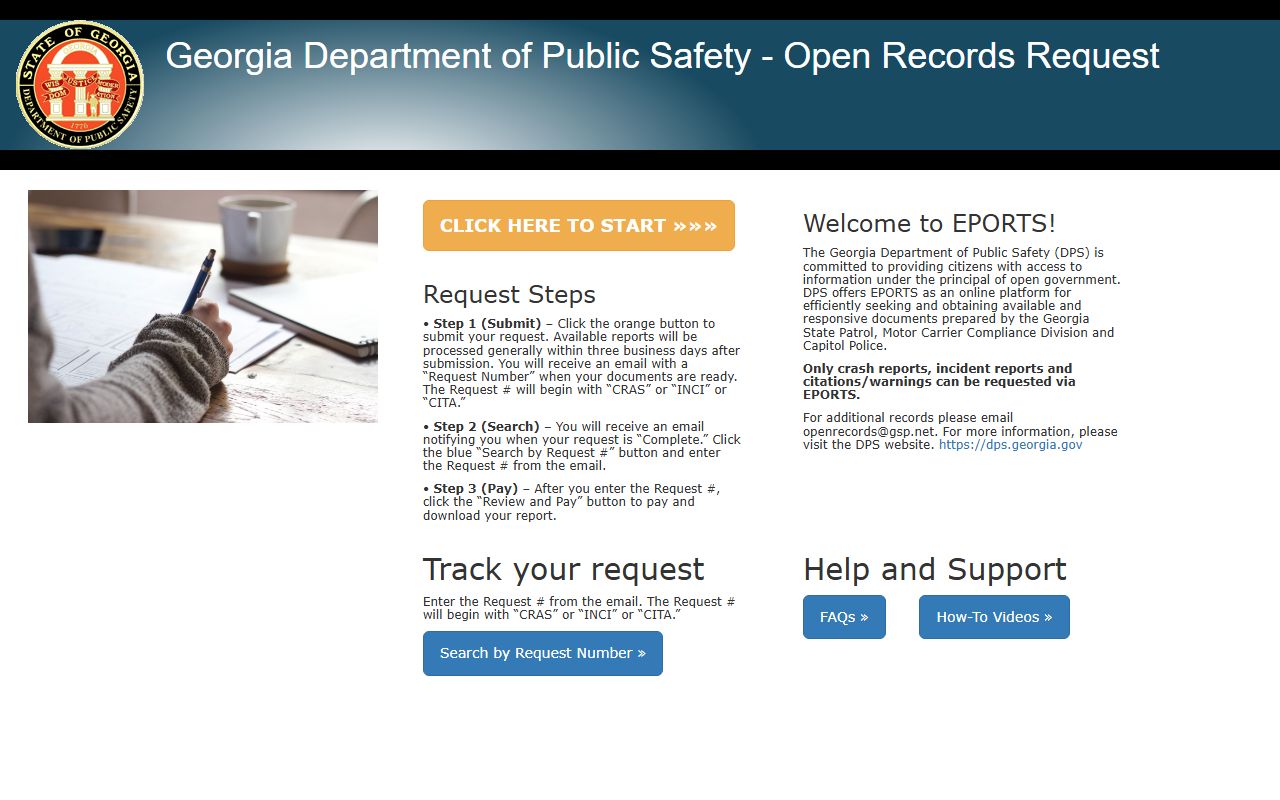
The Georgia Department of Public Safety gives the public access to police blotter records through a system called EPORTS. That stands for Efficient Purchase of Records Transfer System. It is a fast, secure online tool built for people who need copies of Georgia law enforcement reports. You can use it to get traffic citations, crash reports, incident reports, and arrest reports filed by the Georgia State Patrol, Capitol Police, and Motor Carrier Compliance Division. The Georgia EPORTS system runs around the clock, so you can start a request at any time from home. Reports from city or county police are not on EPORTS since it only covers state-level Georgia law enforcement divisions.
You can start your search at the EPORTS records portal. The site walks you through each step.
Georgia police blotter reports on EPORTS are usually ready within three to five business days after the incident. Georgia citations are faster. They show up in about 24 hours. Georgia crashes that involve serious injury or death take more time to prepare. If your search comes up blank, the report may not be done yet. Try again in a few days. Under O.C.G.A. § 50-18-70, police reports are public records in Georgia. That law defines a public record as any document prepared and kept by a government agency, which includes police blotter data.
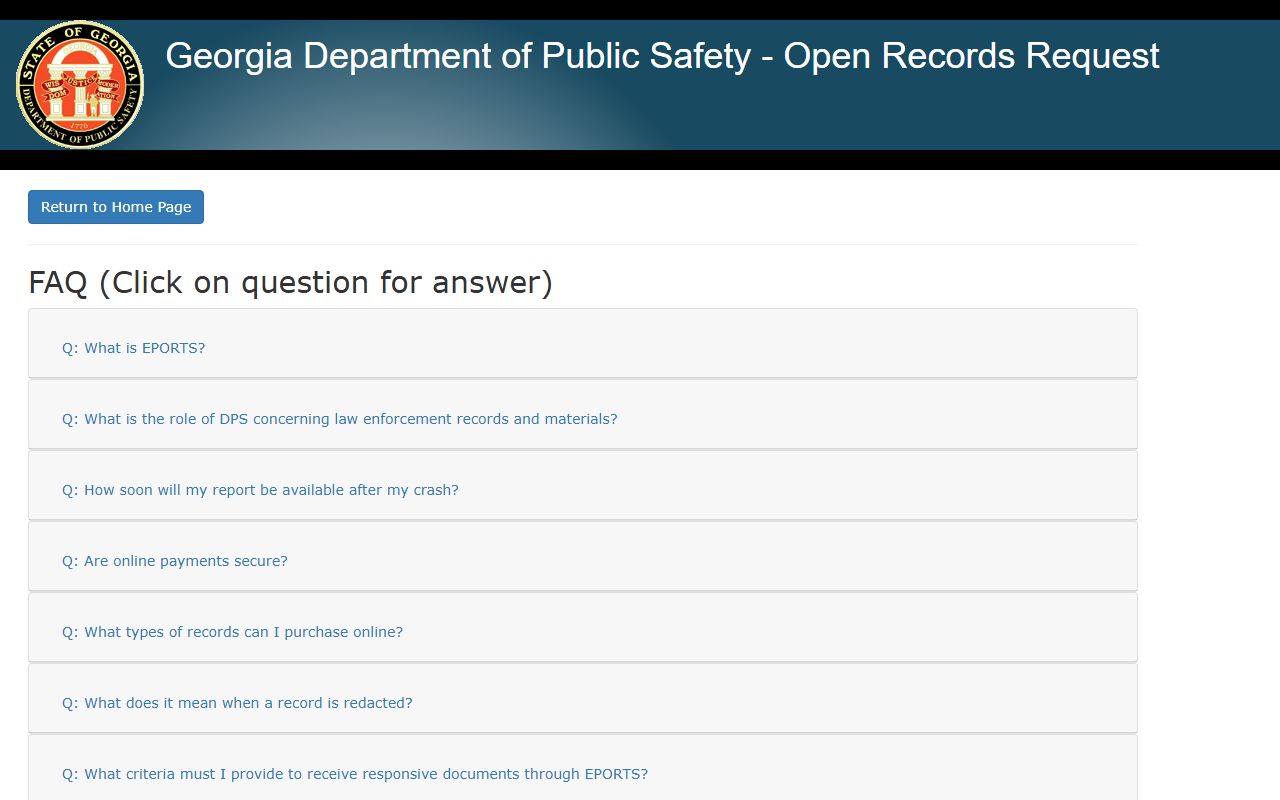
The EPORTS FAQ page answers common questions about the request process in Georgia.
Note: EPORTS only has reports from Georgia state law enforcement, not local city or county police blotter records.
Request Georgia Incident Reports
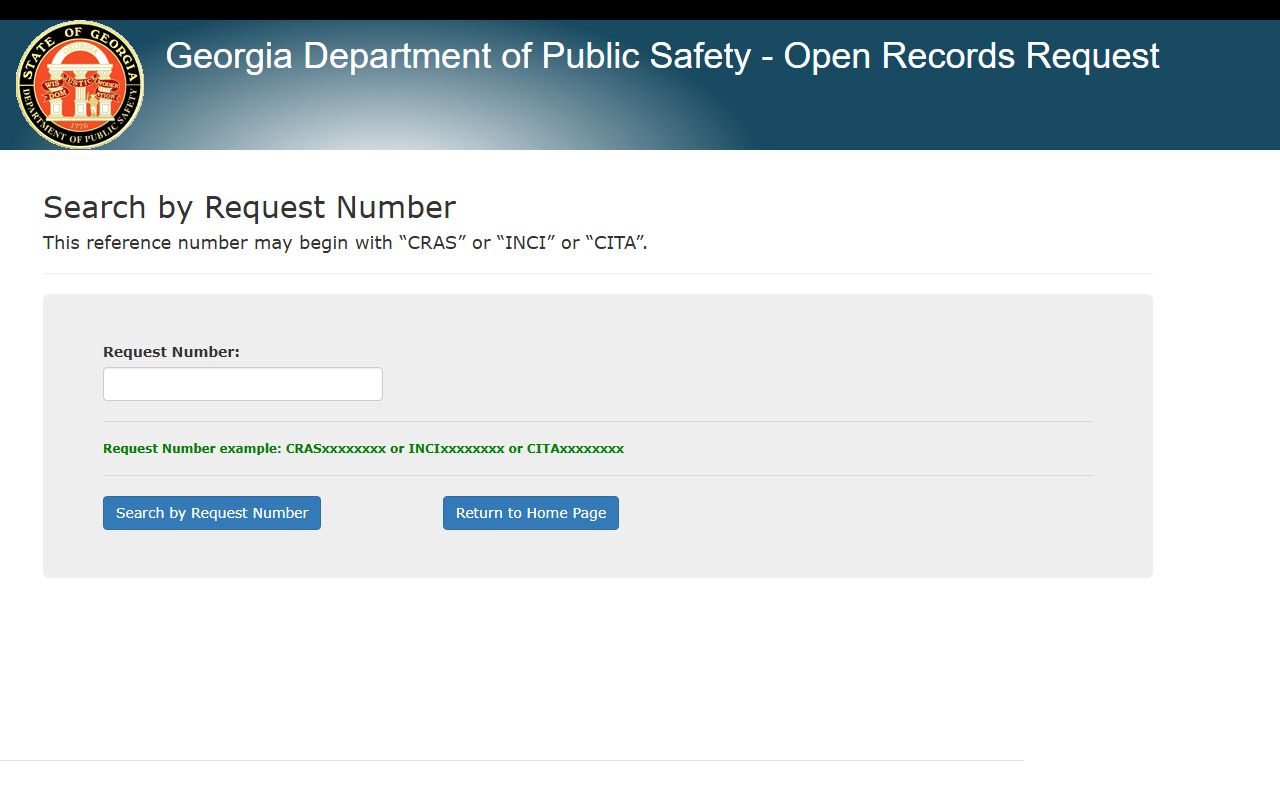
Getting a Georgia police blotter report through Georgia EPORTS takes three steps. First, you submit your request. Click the orange button on the Georgia portal page. Your request number starts with "CRAS" for crash reports, "INCI" for incident reports, or "CITA" for citations. Second, you wait for an email that says your report is ready. Then you search by your request number. Third, you click "Review and Pay" to pay the fee and download your Georgia police blotter report. The whole Georgia process happens online.
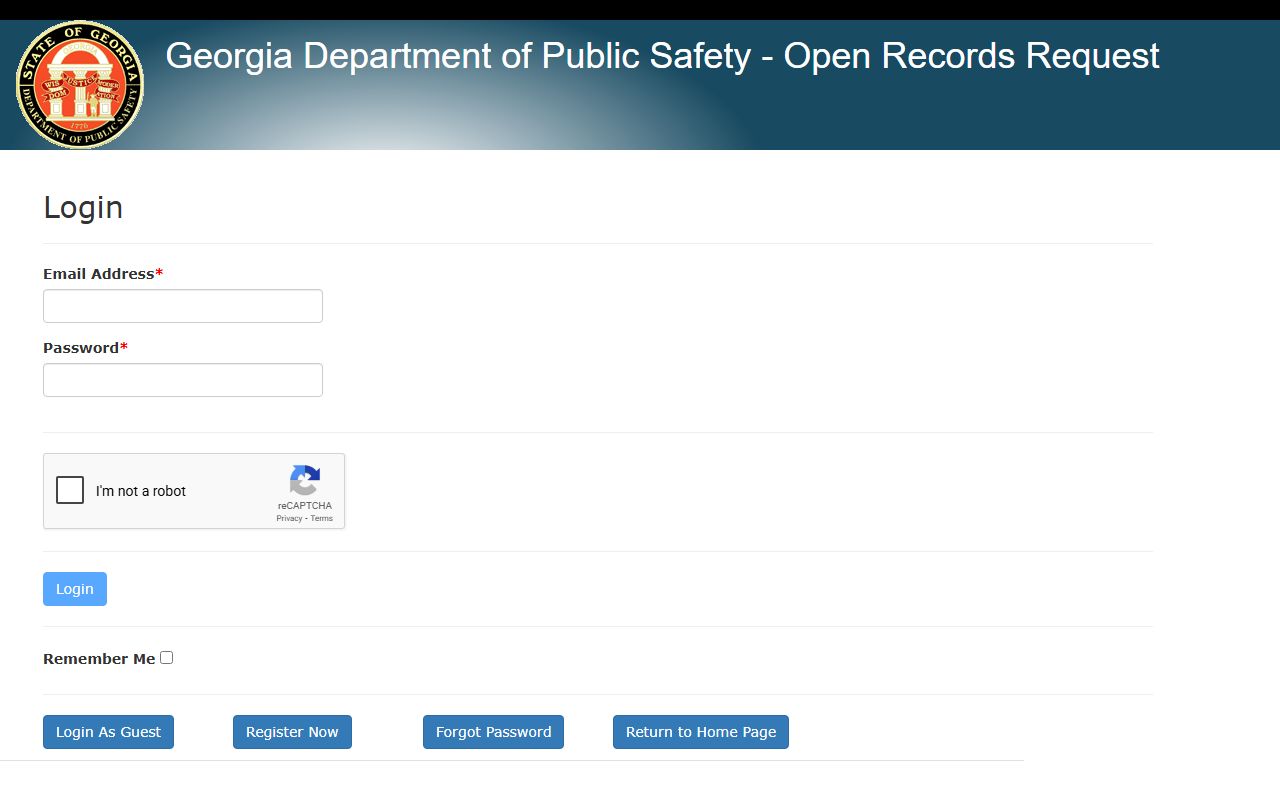
You need to create an account to start. The EPORTS login page is where you sign in or set up a new account to request Georgia police records.
Once your report is done, you can track it. The EPORTS tracking page lets you look up any request by its number.
Georgia law has a special rule for crash reports. Under O.C.G.A. § 50-18-72(a)(5), you must provide a statement of need to get a motor vehicle accident report. You have to show some connection to the crash. This applies to parties in the Georgia crash, their insurers, lawyers, Georgia law enforcement, news media, and government officials. Regular Georgia police blotter incident reports do not need a statement of need. Anyone can request them.
Georgia Police Blotter Fees
Georgia police blotter reports from EPORTS have set fees. A Georgia incident report costs $2.00. A Georgia crash report costs $5.00 for an uncertified copy. Your first Georgia traffic citation is free. Each extra citation in the same 24-hour cycle costs $1.00. If you need a certified copy, add $2.00 to any fee. These prices cover Georgia State Patrol reports only. County and city agencies in Georgia set their own rates for police blotter copies.
The DPS publishes its full fee list online. You can review the Georgia DPS fee schedule for open records requests before you submit anything.
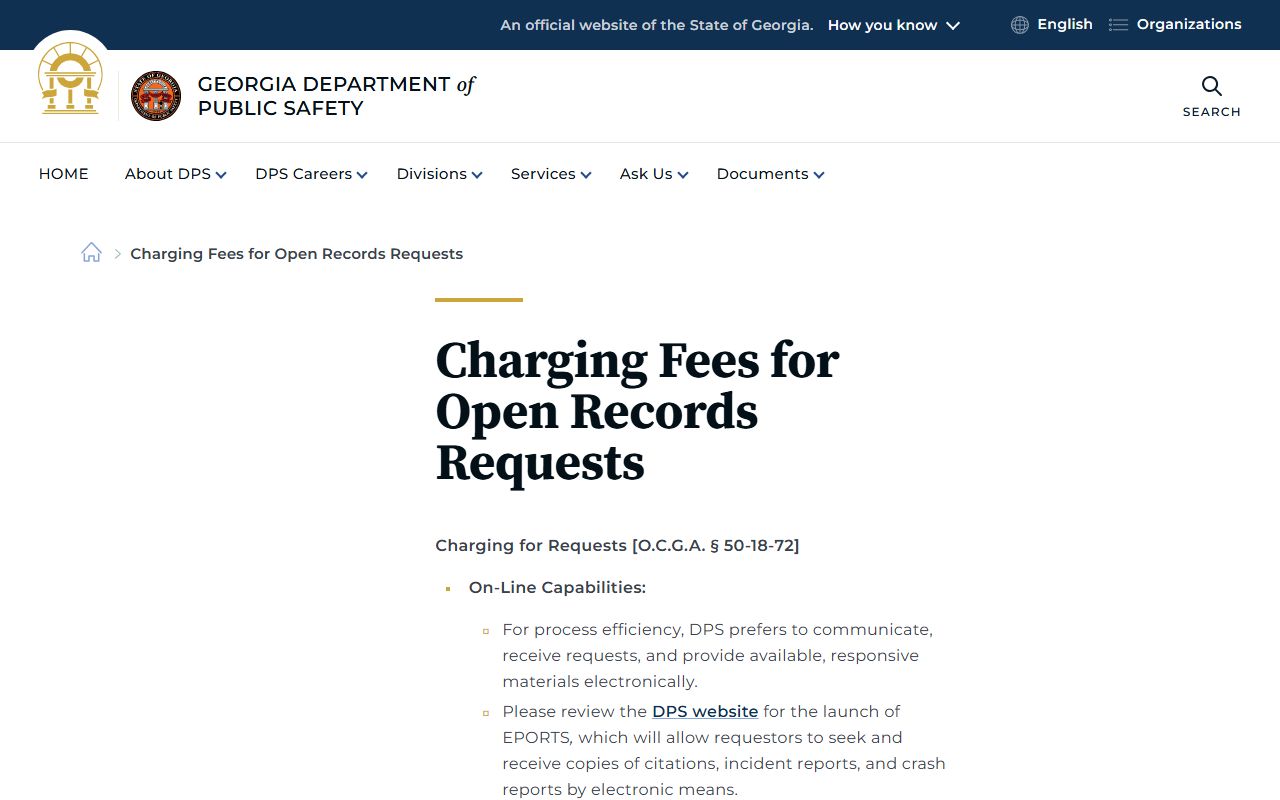
For local agencies in Georgia, O.C.G.A. § 50-18-71 sets the rules. Agencies can charge up to 10 cents per page for letter and legal sized copies of police blotter records. They can also charge for search and retrieval time at the hourly rate of the lowest paid employee who can do the work. The first quarter hour of search time is free. So if a Georgia sheriff or police department pulls a blotter report in under 15 minutes, you only pay for the copies. Payments at the state level go through CyberSource, a secure processing center.
For records that go beyond what EPORTS covers, such as dash-cam video or photos, you email the DPS Open Records Unit at openrecords@gsp.net. The phone number is (404) 624-7591. Mail requests go to P.O. Box 1456, Attention: Open Records Unit, Atlanta, GA 30371. These requests follow the same Georgia open records rules but are handled by staff, not the automated system.
Georgia Police Records and the GBI
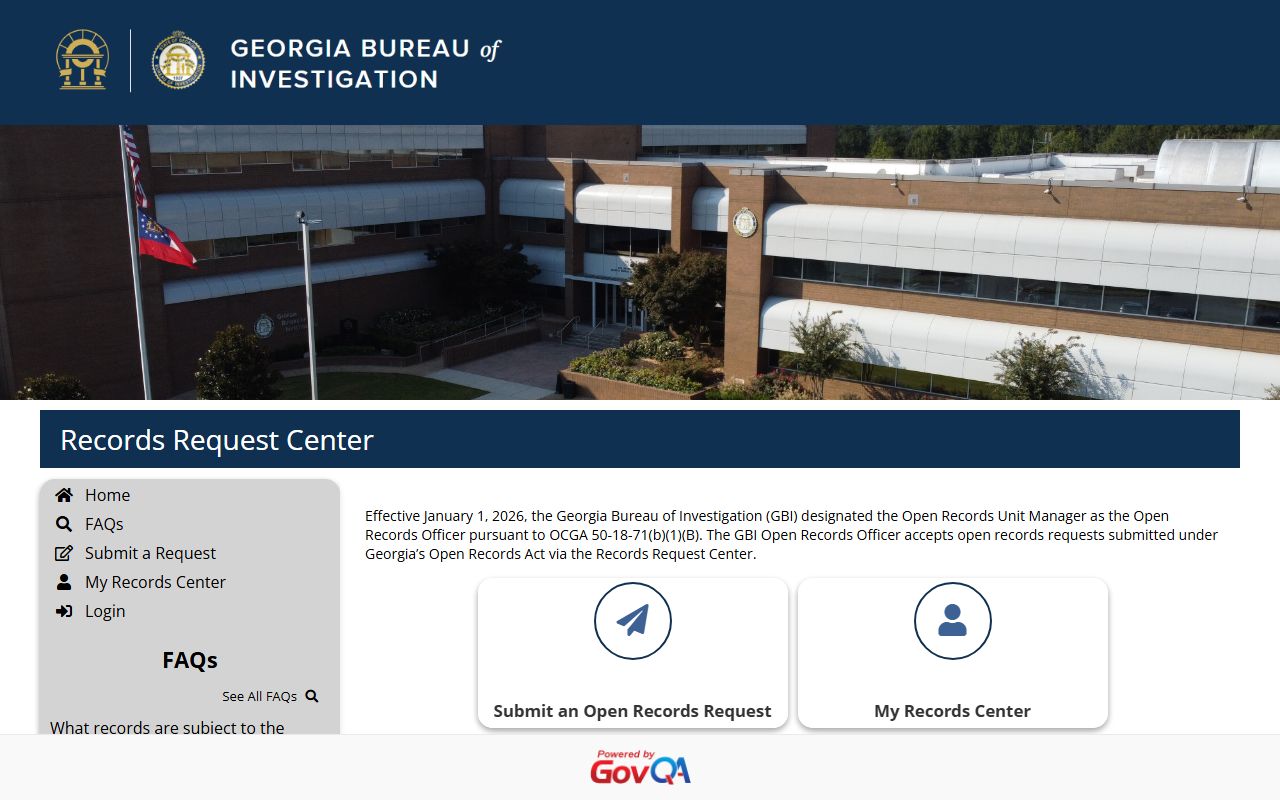
The Georgia Bureau of Investigation handles a different set of police records than local agencies. GBI is an independent statewide agency that supports the criminal justice system through investigations, forensic lab work, and computerized crime data. The Georgia GBI does not handle routine police blotter reports from cities or counties. But they keep Georgia criminal history records, run the sex offender registry, and collect crime statistics from over 600 Georgia law enforcement agencies. You can submit a records request to the GBI through their online portal.
The GBI Records Request Center is where you start an open records request with the Georgia Bureau of Investigation.
To file your request, use the GBI open records submission form. You fill in your details and describe what Georgia police records you need.
Criminal history is one area where Georgia law limits access. Under O.C.G.A. § 35-3-34, criminal history records other than Georgia felony convictions need the consent of the person whose record you want. That means you cannot just pull someone's full criminal background without their approval. Georgia felony convictions are public, but arrest records tied to pending cases or records that show non-conviction data need consent. The Georgia Crime Information Center, a division of GBI that has run since 1973, manages this data.
Georgia Crime Reports and Tips
Georgia tracks crime data at the state level through the Georgia GBI Uniform Crime Reporting program. Over 600 Georgia law enforcement agencies send monthly crime reports to the GBI. The state became NIBRS certified in June 2018 and moved to full NIBRS reporting by October 2019. In 2023, Georgia agencies reported 220,261 total index crimes. That broke down to 35,739 violent crimes and 184,522 property crimes. This data helps paint a broader picture of police blotter activity statewide.
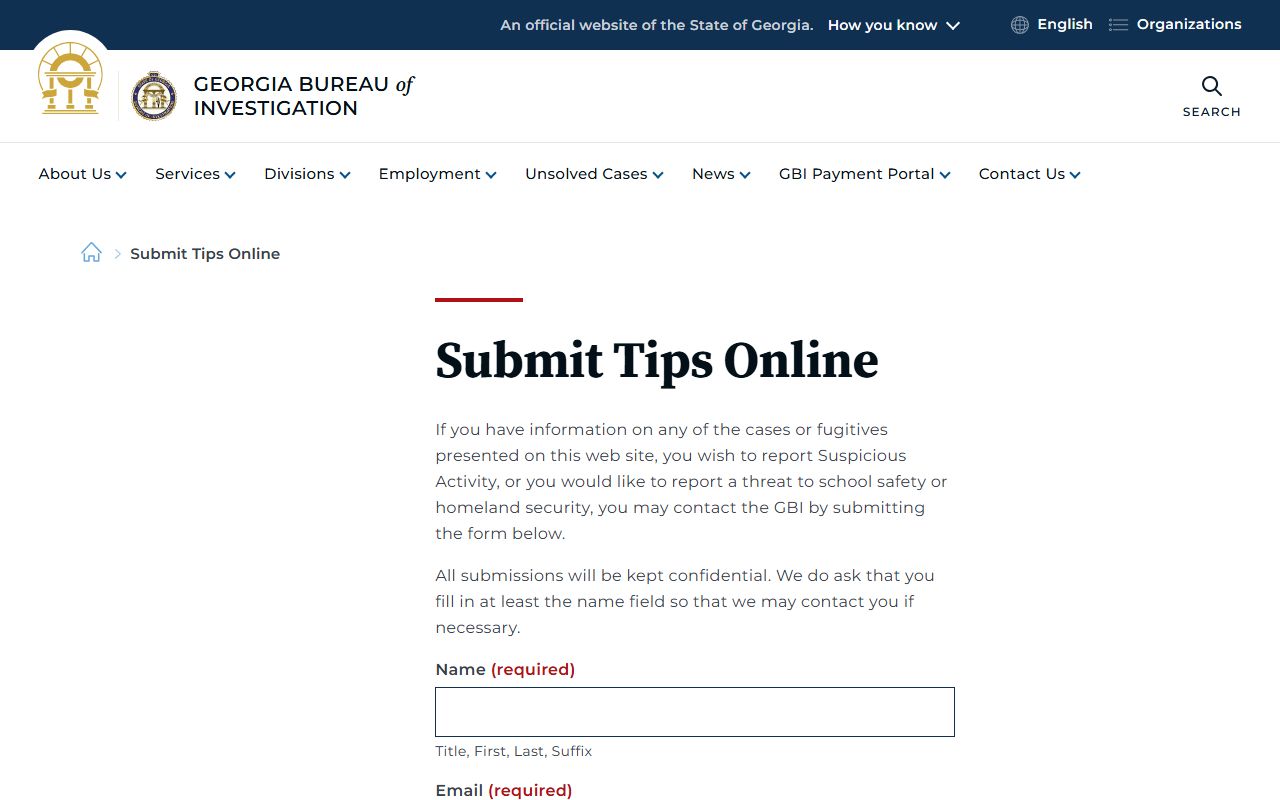
If you have a tip about a crime in Georgia, you can report it online. The GBI tip submission page takes anonymous tips. You can also call the GBI tip line at (800) 597-8477.
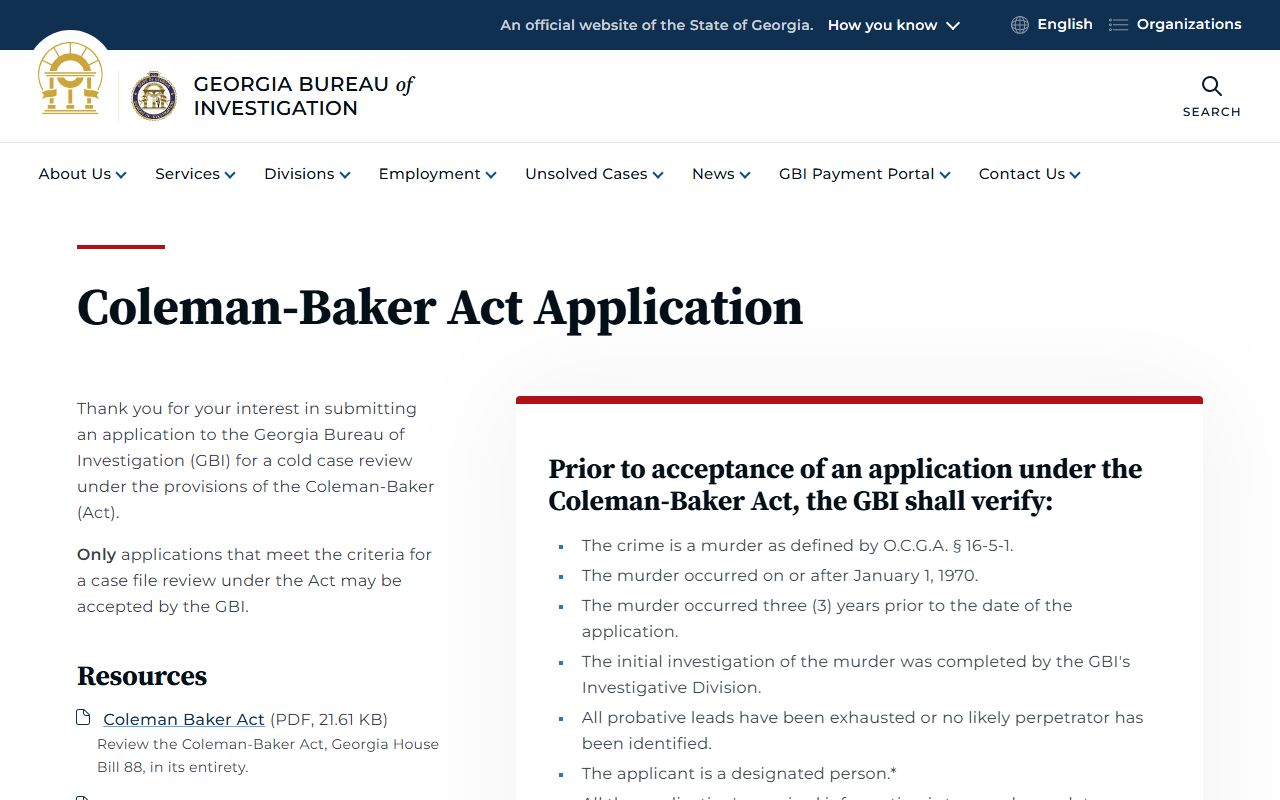
Georgia also runs a cold case review program. Under the Coleman-Baker Act, families can apply to have old unsolved cases reviewed. The cold case review application is available through GBI.
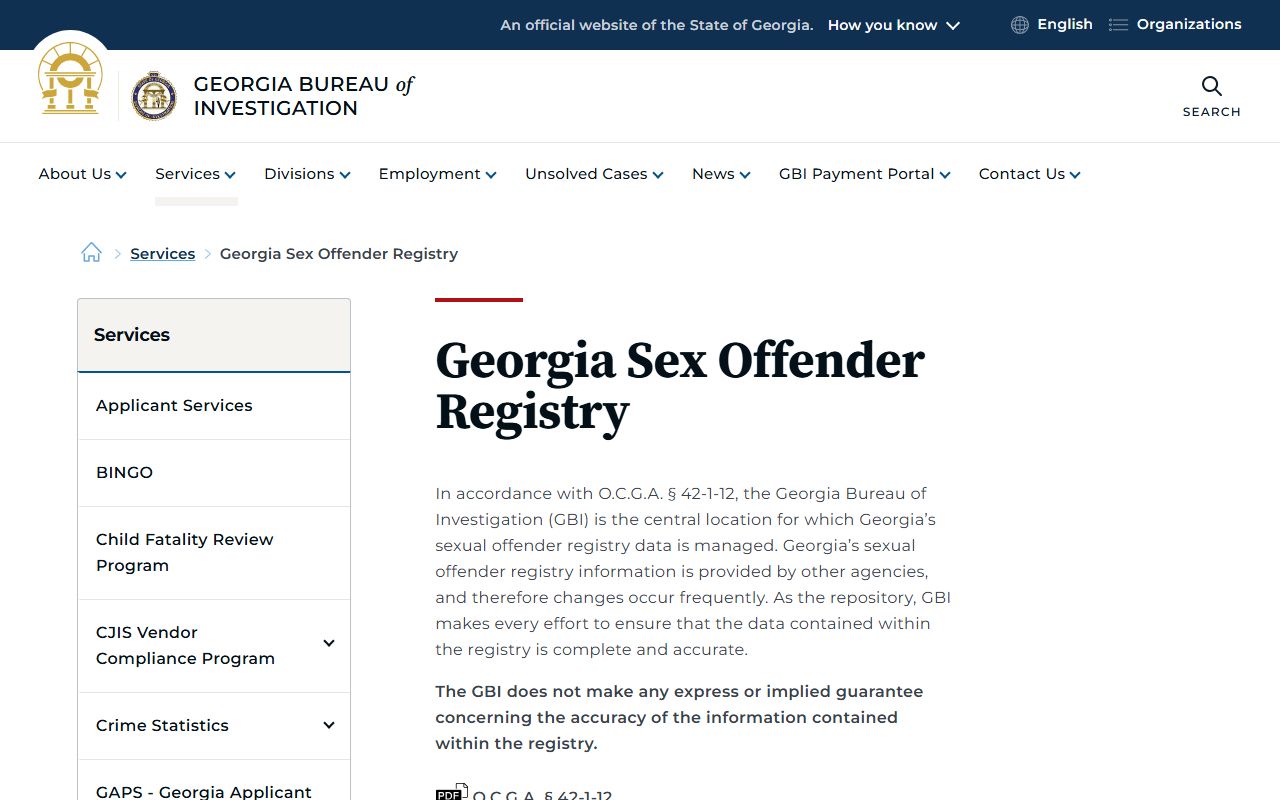
The Georgia Sex Offender Registry is another tool tied to police blotter records. GBI maintains this database under state law. You can search it to see if someone in your Georgia area is a registered sex offender. The Georgia Sex Offender Registry is free to use and open to the public.
Georgia Offender Search Records
The Georgia Department of Corrections keeps records on anyone who is or was locked up in a state prison. This ties into the Georgia police blotter chain since an arrest logged on a local Georgia blotter can lead to a state prison sentence. You can search for offenders through the GDC online tool. It shows who is currently in a Georgia state facility. Georgia offender photos display if they are on file. The GDC offender search is free to use.
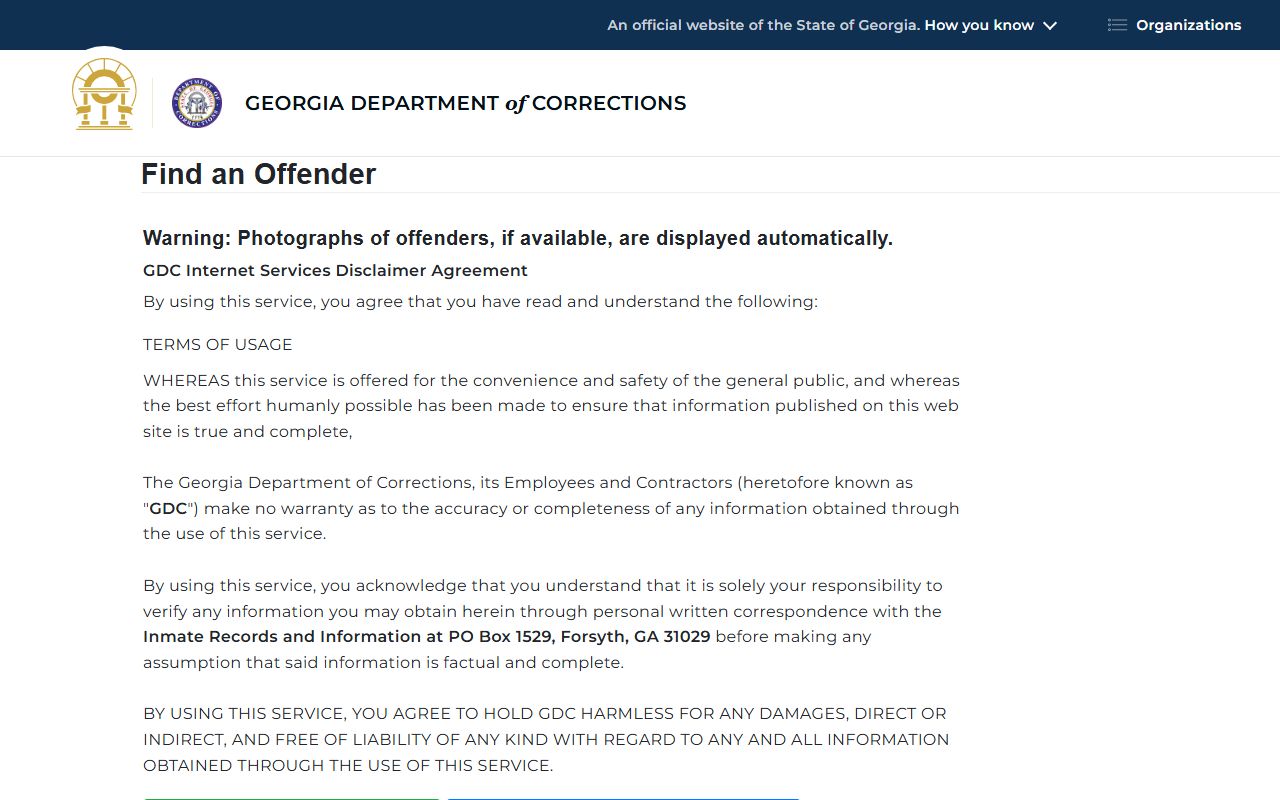
GDC warns that the data may not be complete or fully up to date. If you need to verify information about someone in a Georgia prison, write to Inmate Records and Information at P.O. Box 1529, Forsyth, GA 31029. That is the only way to get official written confirmation. Police blotter records from the original arrest would be at the local sheriff or police department in Georgia, not at GDC.
Under O.C.G.A. § 50-18-72(a)(4), records that are part of a pending investigation or prosecution are exempt from public disclosure in Georgia. So if an arrest on a local police blotter leads to an active case, some documents tied to that investigation may be held back until the case is resolved. The initial incident report is still public in most situations.
County Police Blotter in Georgia
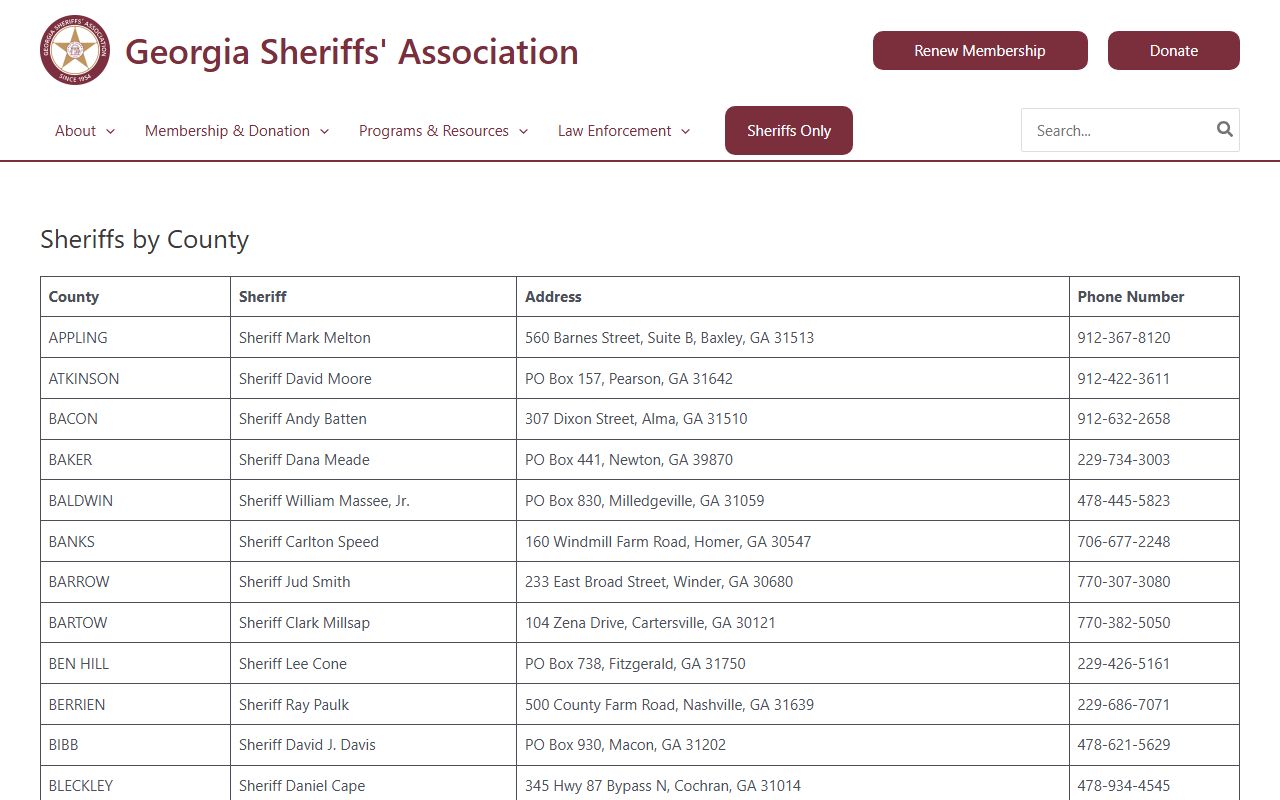
Most police blotter records in Georgia come from county sheriff offices. Georgia has 159 counties. Each one has an elected sheriff who runs law enforcement for unincorporated areas and often the entire county. The sheriff's office keeps arrest logs, incident reports, and booking records. Some Georgia counties post daily arrest data on their websites. Others require you to file a written request. The Georgia Sheriffs' Association represents all 159 sheriffs and promotes law enforcement standards across the state.
To find the right sheriff for your police blotter request, use the sheriffs by county directory. It lists contact info for every Georgia county sheriff.
Under O.C.G.A. § 50-18-71, Georgia agencies must produce records within three business days of getting a request. That rule applies to sheriff offices too. You do not have to state a reason for your Georgia police blotter request (except for crash reports, which need a statement of need). Copy fees are capped at 10 cents per page. Some Georgia sheriff offices have their own online portals where you can view daily arrest reports without filing any formal request at all. Douglas County and Polk County are two examples that post police blotter data on their websites.
Georgia law also sets limits on what police blotter records agencies can hold back. Under O.C.G.A. § 50-18-72(a)(3), documents that would reveal a confidential source, endanger someone's safety, or expose a confidential surveillance operation are exempt. But routine police blotter entries like arrest names, charges, and booking info are public in Georgia. The initial incident report is almost always available.
Georgia Open Records Requests
Georgia's Open Records Act is the law that gives you the right to see police blotter records. It covers all documents prepared, maintained, or received by any government agency in Georgia. That includes every police department, sheriff office, and state agency. The law is found at O.C.G.A. § 50-18-70 through § 50-18-77. You can look up the full text at the LexisNexis Georgia Code database.
Here are a few things to keep in mind when you request Georgia police blotter records:
- Agencies have three business days to respond
- No reason is needed for most police blotter requests
- Copy fees max out at 10 cents per page
- The first 15 minutes of search time are free
- Crash reports need a statement of need
- Active investigations may be exempt
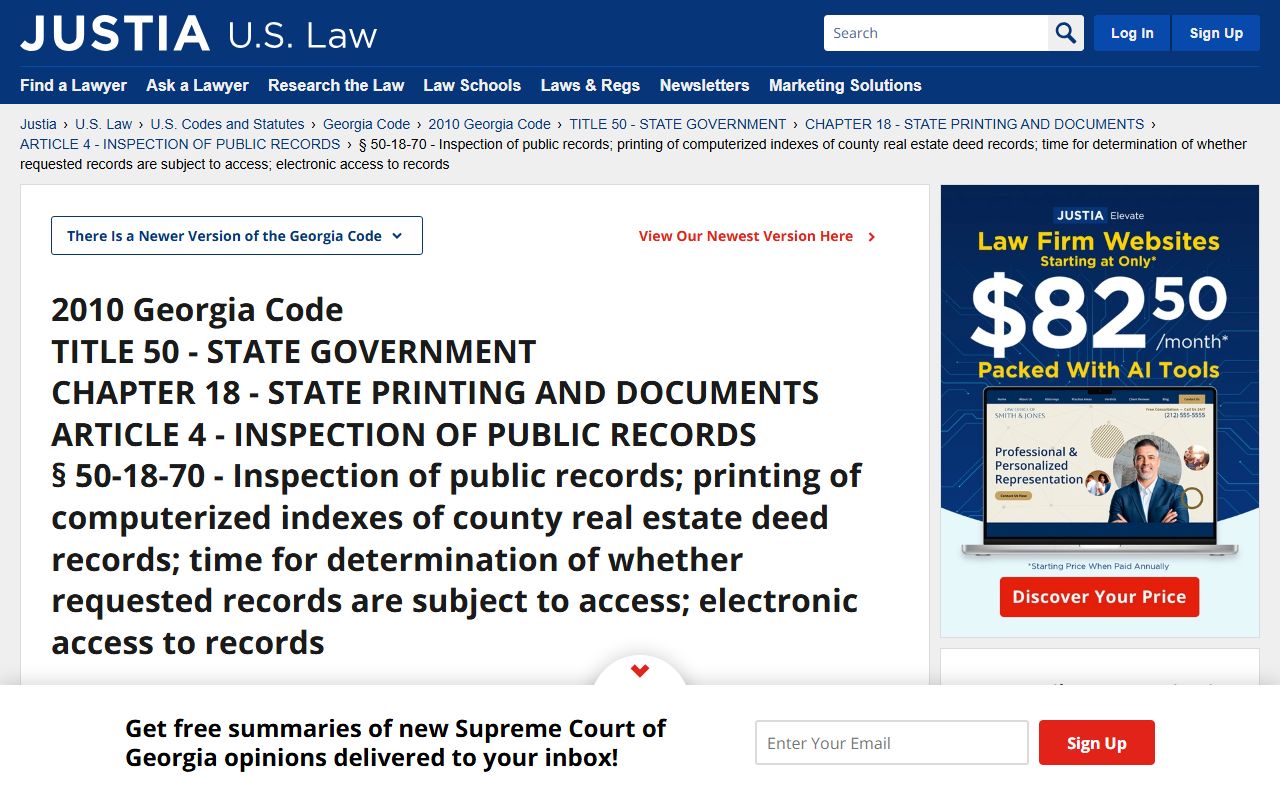
The Justia Georgia Code page for § 50-18-70 is another source where you can read the full statute online.
If a Georgia agency denies your police blotter request or delays past three business days, you have options. You can file a complaint with the Georgia Attorney General or take the matter to court. The Open Records Act has enforcement teeth. Georgia courts can order agencies to produce records and can award attorney fees to the requester if the Georgia agency acted without a valid reason to withhold police blotter data.
Browse Georgia Police Blotter by County
Each Georgia county has a sheriff's office that keeps police blotter records. Pick a county below to find contact info and local resources for police records in that area.
Police Blotter in Major Georgia Cities
City police departments in Georgia handle police blotter records for their jurisdiction. Select a city to find local resources and learn which agencies keep records in that area.